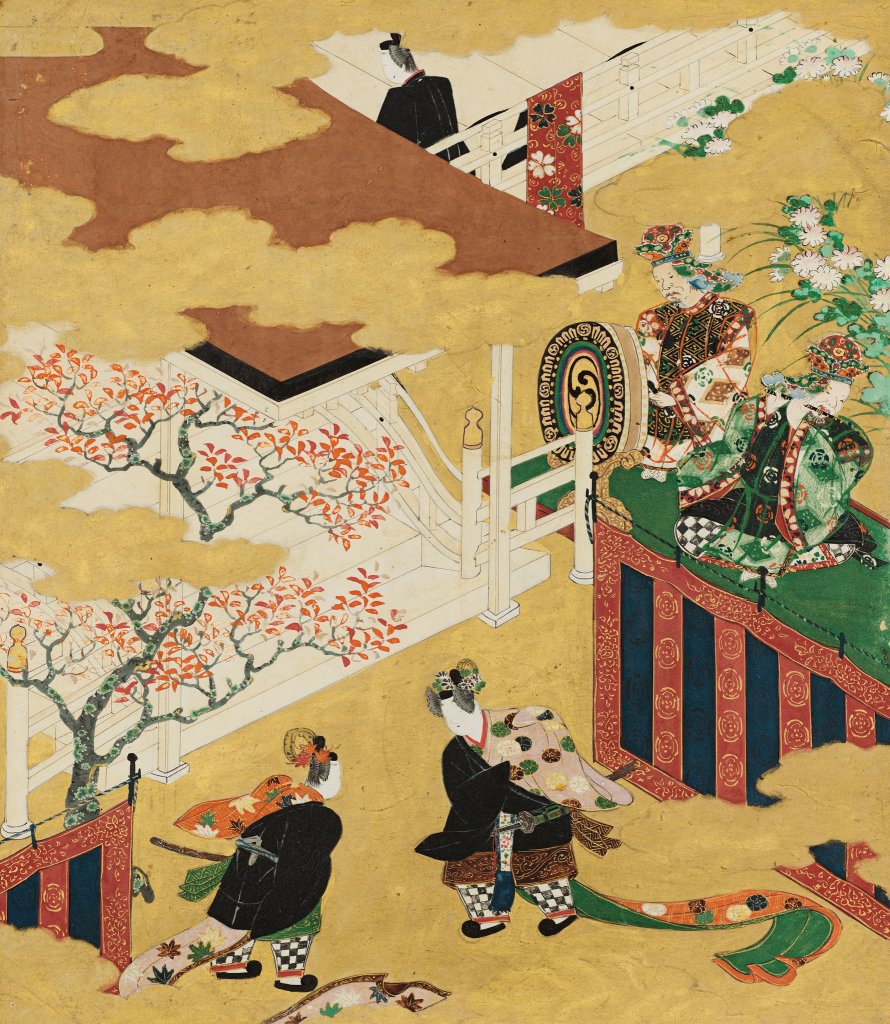
Written over one thousand years ago, The Tale of Genji by Murasaki Shikibu is widely considered to be the first novel. The fictional story following the life and romantic endeavors of Hikaru Genji spawned the literary tradition of the novel. The art form of the novel grew in popularity until it became a worldwide, multicultural phenomenon. Novels like Pride and Prejudice, Ulysses, The Satanic Verses, and Norwegian Wood have all cemented themselves as seminal artworks.
In 1958, William Higinbotham created the world’s first video game, “Tennis for Two.” This electronic game was nearly identical to the famous “Pong,” as it involved moving rectangles to bounce a pixel back at your opponent. These early video games were a technological marvel but were a bit light on the story. That is to say, the story was nonexistent. Not until the advent of arcade games would video games incorporate story elements, but they were the bare bones of a story. Mario chasing after Donkey Kong to save his girlfriend Pauline is an excellent example of story elements creeping into video games; the hero sets out after an inciting incident, the hero defeats the villain, and the hero returns home victorious. The basic Hero’s Journey became the foundation for video games for years. Then improvements in hardware changed the capacity for video games to tell a story. Games like The Legend of Zelda: Ocarina of Time, Dragon Quest III, Fire Emblem: Three Houses, and Inside all tell original and thought-provoking stories but are not considered “high” art.

My blog seeks to rectify the critical acceptance of video game stories. Much like video games, novels were not always considered “high” art. Fictional stories were thought to have little bearing on real-life issues, and novels were considered nothing more than base entertainment. Only after a precipitous rise in popularity, and widespread discussion and criticism, were novels finally accepted as “high” art. I believe that video games are currently experiencing this same move from “low” to “high” art as the novel did hundreds of years ago. Once considered pulp fiction, the novel broke through into widespread critical acceptance, and the video game is currently experiencing a similar watershed moment. Through the similar relationship in critical acceptance, it is invaluable to analyze these art forms side-by-side.
As I analyze novels and video games, I will compare two stories, one from a novel and one from a video game. However, I will do more than simply compare and contrast novels and video games. I want to analyze how the novel and video game emerged artistically, how they interact uniquely with their audience, and their commercial appeal. You can think of this blog as less of pitting two stories against each other every post, and more as a comprehensive comparison of how art functions in our world. Once we comprehensively examine novels and video games, the analysis between a novel and a video game will gain greater significance. The main goal of this blog is to raise the critical acceptance of the video game by using the accepted artistic lens of the novel to garner a critical perspective. I believe this goal is essential to the future of video games, as critical acceptance breeds thought and discussion about video games as an artistic medium. The thought and discussions on video games as art will result in more boundary-pushing stories and experiences to explore.


My main blogs will analyze a novel and a video game to see what the two art pieces have to say about each other. These Novel x Video Game blogs will be published about once a month, giving me time to dive deep into a respective video game and novel. Alongside these long-form essay blogs, I will also make shorter-form content. These can range from the history of both mediums, current events revolving around these art forms, or just summaries of experiences I am currently having with novels and video games. The short-form blogs will enhance your knowledge of novels, video games, and art as a whole. Furthermore, ideas from the short-form blogs will feature in the novel x Video Game, giving you food for thought before the serious critical analysis. For a thousand years, novels have spurred on thought and discussion that contribute to the whole world. Immense issues like class consciousness and climate change find fertile ground for thought in novels. Also, introspective discussion on depression, self-improvement, and morality grows out of experiences from novels. It is no stretch of the imagination that novels, and art as a whole, shape how we and the world around us think. I believe that as video games become “high” art, they will shape the way we think in a similar fashion. If we put in the effort to critically analyze these video games, we can change the way that we and the world think.
 Zachary Podl